 Prana Bloom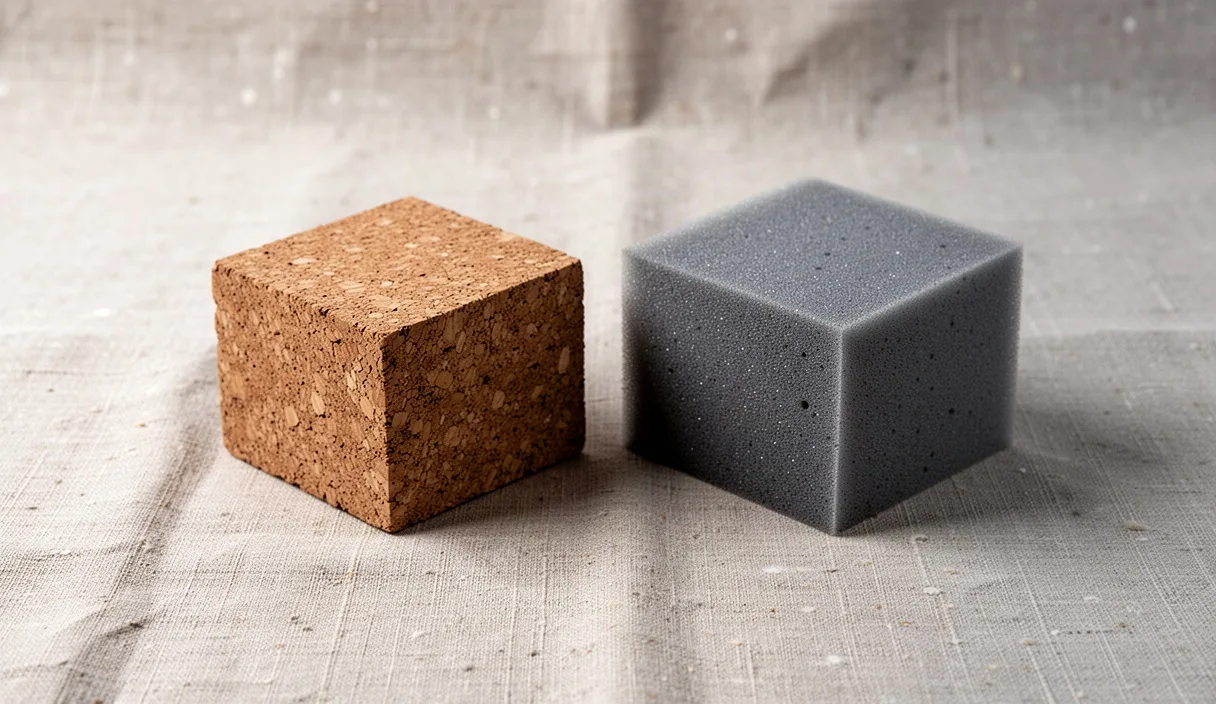

A yoga block alters the distance between the floor and the body. It brings the floor closer in standing postures. It offers support beneath the bones in seated and reclined shapes. Most studios provide blocks made of synthetic foam or natural cork. Each material responds to pressure and body weight differently.
The choice between foam and cork affects balance, comfort, and transport. Foam gives way under targeted weight and feels soft against the skin. Cork remains firm, resists compression, and anchors firmly on a studio floor. Understanding the tactile traits of both materials helps practitioners select the right prop for their routines.
Material density and weight differences
Foam blocks typically consist of ethylene-vinyl acetate, known as EVA foam. Some makers use recycled EVA or polyurethane blends. These blocks feel airy. A standard four-inch foam block weighs between 180 and 340 grams. The cell structure contains air pockets. These pockets compress when you press down with a hand or foot.
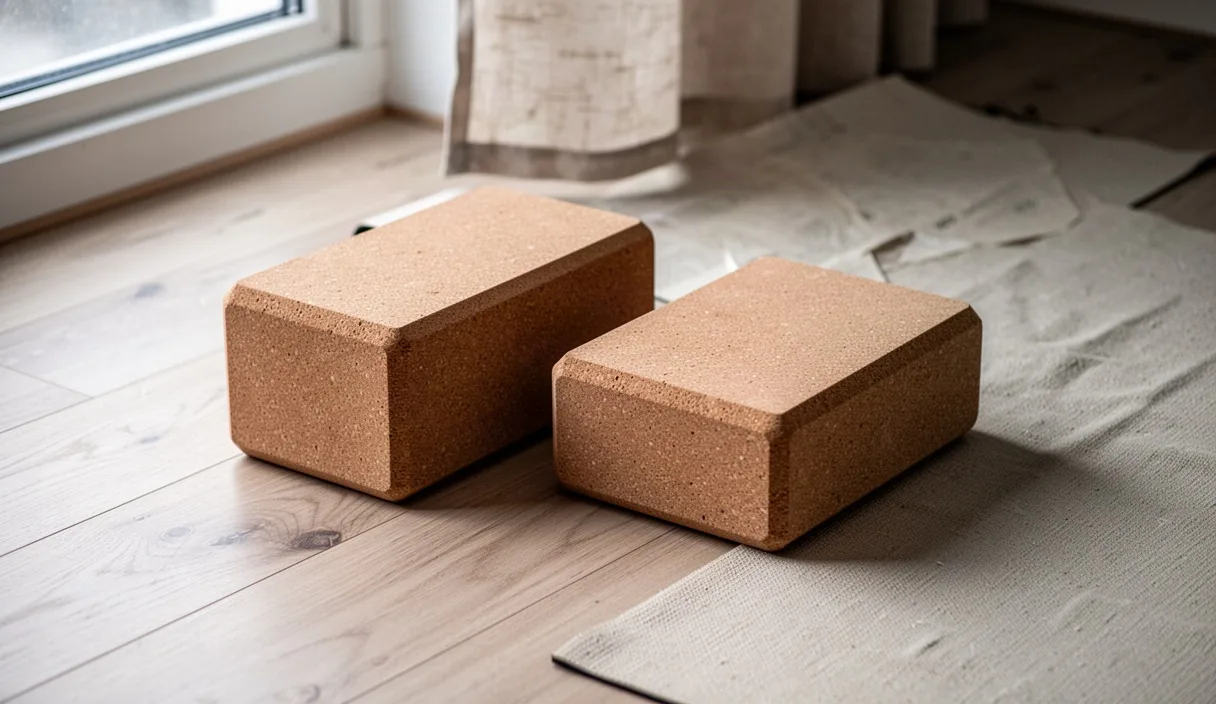
Cork blocks come from the bark of the cork oak tree. The bark is ground, bound with non-toxic resins, and pressed into dense rectangles. A standard four-inch cork block weighs between 700 and 1100 grams. This weight is more than double that of a dense foam block. The density leaves minimal room for internal air space.
Dimensions vary slightly across manufacturers, but two sizes dominate the market. The classic studio block measures four inches thick, six inches wide, and nine inches long. A slimmer model measures three inches thick, six inches wide, and nine inches long. Foam blocks in the three-inch format feel nearly weightless in a gym bag. Cork blocks in either size feel solid and heavy in the hand.
| Feature | EVA Foam Block | Natural Cork Block |
|---|---|---|
| Average Weight (4x6x9 inches) | 230 to 340 grams | 750 to 1050 grams |
| Surface Texture | Smooth, matte, slightly yielding | Porous, textured, firm |
| Compression Under 50 kg Force | 4 to 8 millimeters | Less than 1 millimeter |
| Portability | Light for walking or transit | Heavy in bulk or long commutes |
The weight directly influences how a block moves when bumped. A wandering foot easily kicks a foam block across the mat. A cork block stays where you place it. When you drop a foam block, it bounces quietly. When you drop a cork block, it hits the floor with a loud, heavy thud.
Stability in standing balance poses
Standing balance poses demand a dependable foundation. In postures like Ardha Chandrasana (Half Moon Pose), one hand bears a share of the body weight on a vertical block. The hand presses down, and the block must not wobble or bend along its edges.
Cork provides firm security here. The weight of the cork keeps the base flat on the mat. The corners do not give way when your palm rests near the perimeter. If your hand sweats, the cork absorbs slight surface moisture. The grip increases rather than slips. The practitioner feels a sensation similar to pressing into a wooden floor.
Foam presents a different experience during balance. Soft foam compresses under the heel of the hand. This compression tilts the wrist slightly. The small tilt forces the forearm and stabilizing muscles around the ankle to work harder. For students with wrist sensitivity, this give can create fatigue or ache. Firmer high-density foam reduces this tilt, but it still lacks the absolute rigidity of cork.
Setting a block for Half Moon Pose
- Place the block twelve inches in front of your standing pinky toe.
- Turn the block to its highest vertical setting for maximum height, or its medium setting for more surface area.
- Place your palm on the center of the block face, not on the edge.
- Press the base of your index finger into the surface to distribute downward force.
- Stack your top hip over your bottom hip once the bottom hand feels anchored.
In postures such as Utthita Trikonasana (Extended Triangle Pose), lateral stability matters. When leaning into a foam block on its highest setting, the prop can tip sideways if the hand presses at an angle. A cork block resists tipping because its center of mass sits much lower to the ground. Practitioners who place considerable weight on props often prefer the grounded nature of cork.
Comfort during restorative positions
Restorative yoga requires the nervous system to settle. The body rests on props for five to twenty minutes at a time. In these poses, a prop should not create sharp pressure points against bones or muscles. If a prop creates pain, the body tenses instead of softening.
Foam excels in restorative practice. In Supta Baddha Konasana (Reclined Bound Angle Pose), blocks sit under the outer thighs to support the knees. Foam yields slightly under the weight of the legs. The rounded edges of a foam block cushion the outer hips. The skin does not pinch against the material. In Matsyasana (Fish Pose), a foam block placed beneath the thoracic spine cushions the ribs and shoulder blades comfortably.
Cork can feel unyielding during long passive holds. When placed under the sacrum in Supported Bridge Pose, cork presses hard against the back of the pelvis. For bodies with thin tissue cover or sensitive bone structures, this pressure causes discomfort after two minutes. To use cork comfortably in restorative sequences, you must pad the surface with a folded wool blanket or cotton towel.
Arranging props for supported chest opening
- Place one block horizontally across the upper third of your mat to support your shoulder blades.
- Place a second block vertically at the top of your mat to support the back of your head.
- If using cork, lay a folded blanket across both blocks to soften the surface edges.
- Lower your spine down so the lower edge of the horizontal block sits just below your shoulder blades.
- Rest the back of your skull on the second block, adjusting height so your chin rests level with your forehead.
- Extend your arms out to the sides with palms facing upward.
For restorative classes, the tactile softness of foam makes it the practical choice. It warms to room temperature quickly. Cork holds a cool touch for several minutes after you lie on it. That coolness can be distracting in a slow, still practice room.
Durability and cleaning requirements
Durability depends on use patterns, storage, and cleaning routines. Both materials survive years of personal practice, but they degrade under different environmental pressures. Foam dents, tears, and scratches easily. Fingernails, cat claws, and ring bands leave permanent marks in soft EVA foam. Cork chips at the corners if dropped frequently on hard surfaces, but it resists surface gouges.
Cleaning methods must match the porous nature of each material. Foam features a closed-cell construction. Liquids sit on the surface rather than soaking inside. You can wash foam blocks with warm water and mild dish soap. You can wipe them dry with a clean cloth. They dry completely in an hour.
Cork features an open, porous structure. It absorbs water, oil, and sweat. While cork contains suberin, a natural substance that resists mold and bacteria, it still holds grime over time. Soaking a cork block ruins the binder that holds the granules together. Cleaning cork requires a damp rag and a mild spray, followed by complete air drying in an open space.
| Maintenance Factor | Foam Blocks | Cork Blocks |
|---|---|---|
| Water Resistance | Impermeable; water wipes off clean | Permeable; absorbs water if soaked |
| Cleaning Method | Mild soap, water, damp sponge | Damp cloth, dilute vinegar spray |
| Drying Duration | 10 to 30 minutes indoors | 4 to 8 hours in fresh air |
| Surface Wear | Scratches, indentations, teeth marks | Corner chipping, edge crumbling |
| Life Expectancy (Studio) | 3 to 5 years of daily use | 5 to 8 years of daily use |
Commercial yoga studios often track wear closely. Foam blocks in busy spaces show bite marks from strap buckles within months. Cork blocks maintain their shape longer in high-traffic settings, although their edges soften into rounder curves over several seasons of use.
Matching block type to practice style
The choice between these two props aligns with how and where you move. Dynamic practices like Ashtanga, Power Yoga, and Vinyasa Flow place specific demands on equipment. Slow practices like Yin, Restorative, and gentle therapeutic yoga make entirely different demands.
For dynamic styles with jump-throughs, foam blocks offer a clear benefit. Practitioners place two blocks beneath the hands to add height while lifting the legs through the arms. The hands grip the edges tightly. Lifting your body weight requires stable hands, but moving the blocks quickly between sequences requires low weight. Lightweight foam moves across the mat with a flick of the wrist. Cork blocks slow down these transitions because of their mass.
For Iyengar yoga and precise alignment work, cork serves as the standard prop. Iyengar sequences involve sustained standing poses, wall-supported poses, and precise load-bearing. Teachers often have students stand directly on blocks to stretch the calves or assess foot balance. A foam block crushes under the sole of a standing human foot. A cork block supports full human weight without shifting downward by a single millimeter.
Selecting your block
- Choose foam if: You carry your mat and props on foot, public transit, or bicycle. You prioritize gentle restorative shapes. You have sensitive bones or joints that hurt against hard surfaces. You want an inexpensive prop for home practice.
- Choose cork if: Your blocks remain at home in a dedicated practice corner. You practice Iyengar or alignment-focused balance postures. You sweat heavily during practice. You prefer natural, plant-based materials over petroleum-based synthetics.
Physical considerations also play a role. If you have an active joint inflammation, a history of wrist sprains, or balance issues, stability is your first safety concern. A healthcare provider or physical therapist can tell you whether a rigid base or a softer base is safer for your current joint health.
Common mistakes
Practitioners often buy blocks without considering physical contact and stability. These missteps affect how useful the prop proves over time.
- Using soft foam for standing balance: Thin, low-density foam buckles under the heel of the hand. This causes wrist instability. If you buy foam for balance poses, verify that it is high-density foam.
- Submerging cork in water: Soaking a cork block to clean it weakens the internal glues. The cork swells, loses its smooth surface, and crumbles along the corners. Clean only with a damp, wrung-out cloth.
- Buying only one block: Many essential poses, from supported backbends to forward fold setups, require symmetrical support under both hands, knees, or hips. Buying a single block limits your sequencing. Props work best in matching pairs.
- Placing cork directly under bony areas: Resting the back of the head, sacrum, or spine directly on bare cork often produces pain. Always pad cork blocks with a blanket when working in reclined, passive positions.
Next steps for your home space
If you plan to add blocks to your home space, begin by evaluating your most frequent poses. Look at the balance between active standing work and passive floor work in your weekly routine.
Measure your storage and travel needs. If you take your blocks to a local studio twice a week, weigh a set of cork blocks in your bag before buying. Most people find two cork blocks too heavy for an everyday shoulder tote. For travel, buy two high-density EVA foam blocks. They add minimal weight to your luggage while offering acceptable stability.
For a dedicated home corner where props never leave the floor, purchase a pair of four-inch cork blocks. They look quiet in a room, stay planted during vigorous movement, and last for many years of practice. Keep a thick cotton blanket folded nearby. The blanket bridges the gap between the firm stability of cork and the soft comfort of foam whenever your body asks for gentle support.